JavaScript seems to be disabled in your browser. For the best experience on our site, be sure to turn on Javascript in your browser.
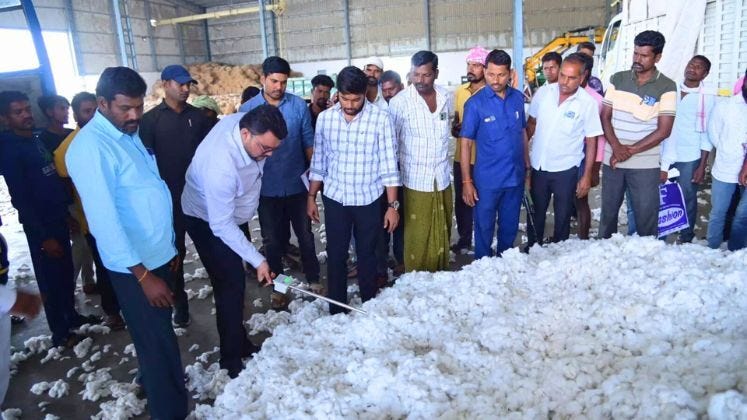
The persistent dip in cotton cultivation across the northern agricultural belt has necessitated a shift in regional crop management strategies for the 2026 Kharif season.
The textile manufacturing sector in Karur is facing an unprecedented margin squeeze as the prolonged West Asia conflict has impacted synthetic fibers procurement in the region. Regional manufacturers report a localized inflationary shock with polyester fiber prices escalating to Rs 130 per kg, a sharp growth from the earlier baseline of Rs 80 per kg. This 62.5 per cent increase in input costs is mainly due to higher maritime insurance premiums and diverted shipping routes, which have collectively extended lead times and constrained the spot availability of high-performance yarns.
The recent $1.5 million funding round secured by Canvaloop from Gujarat Venture Finance and Rockstud Capital is a turning point for India’s non-cotton fiber segment.
The conclusion of Yarn Expo Spring 2026 in Shanghai signals a shift in the global textile value chain, moving beyond basic recycled polyester toward sophisticated circular economy models.
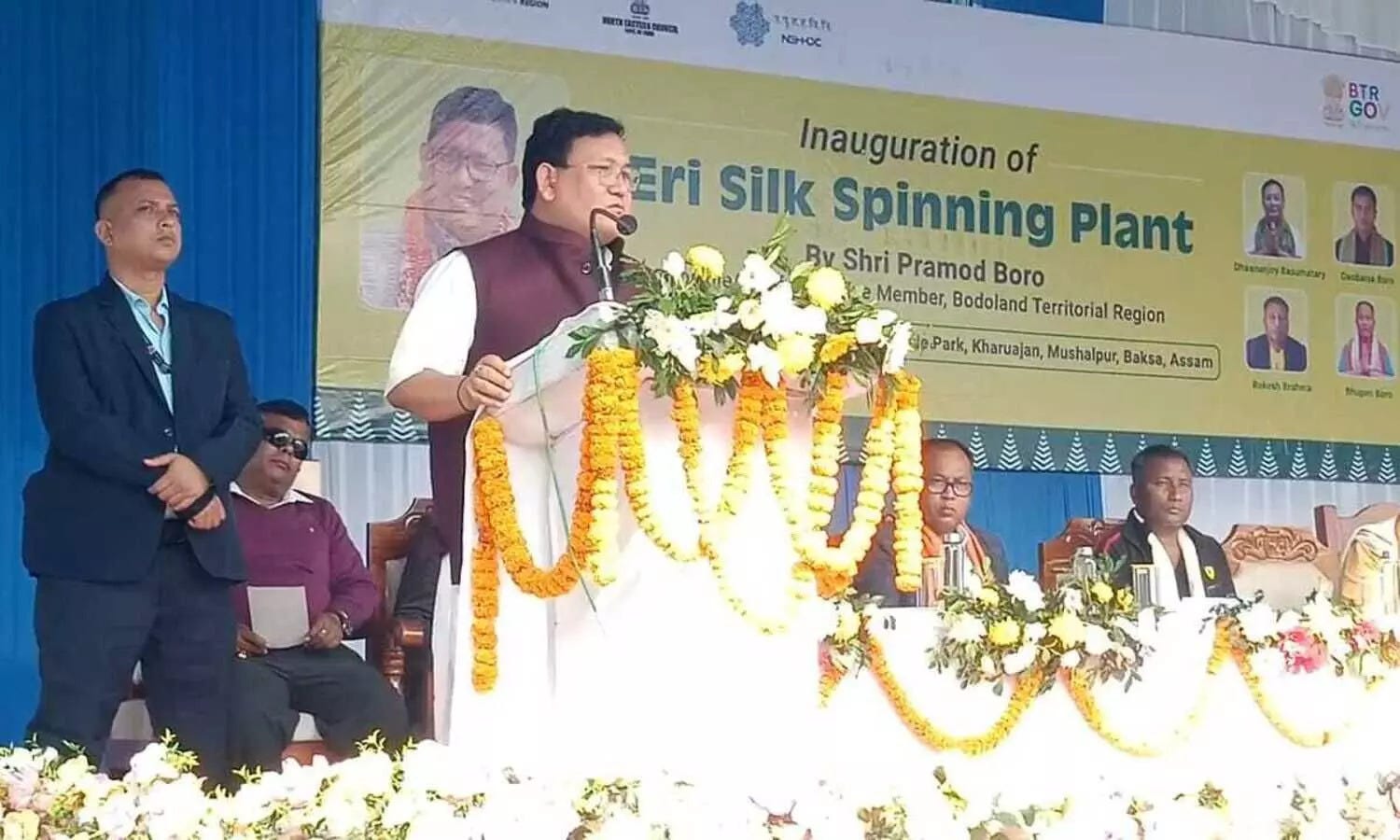
The successful hosting of ‘Tlangro: The Mizoram Silk Runway’, has signaled a shift in India's sericulture strategy, positioning the Northeast as a critical hub for high-end, sustainable fiber production.
Highlighting a fundamental transition in the acrylic value chain from volume-centric output to resource-efficient high-performance materials, Kapil Agrawal, Business Head, Thai Acrylic Fibre (TAF) was recently honored with the Global CEO Award-Circular Enterprise.
Following a period of intensive debt restructuring, Sumeet Industries (SIL) was recently declared the successful bidder for the Phase-3 polyester chips manufacturing plant from Nakoda Ltd through a Rs 23.47 crore slump sale under the Corporate Insolvency Resolution Process.
Indo Rama Synthetics (India) has overhauled of its leadership structure to capitalize on the growing demand for domestic polyester and technical textile segments.
India and Myanmar are increasing bilateral cooperation to overhaul Myanmar’s textile value chain, with a primary focus on the high-grade cultivation of long-staple cotton.
The Directorate General of Trade Remedies (DGTR) has recommended the imposition of definitive anti-dumping duties on Viscose Rayon Filament Yarn (VFY) imported from China, indicating a rigorous federal intervention to stabilize India’s man-made fiber ecosystem.
In strategic partnership with the government of Telangana, the Confederation of Indian Textile Industry (CITI) will host the 13th Asian Textile Conference (ATEXCON) in Hyderabad on April 2-3, 2026.
Ludhiana-based Ganga Acrowools has made substantial capital expenditure worth Rs 750 crore to scale its manufacturing footprint, indicating a shift towards high-performance acrylic and specialty blended yarns.
Vardhman Textiles is redefining the cost structure of Indian spinning and weaving by integrating large-scale power generation directly into its corporate charter.
Sutlej Textiles is in the process of a high-stakes transition from traditional spun yarns to specialized protective textiles to stabilize its long-term growth path.
The Indian synthetic textile value chain is passing through a rapid pricing change as domestic polyester producers adjust to a cooling global energy market.
AB Cotspin India is formalizing its Rs 1,500 crore transition into a multi-state integrated textile powerhouse.
The introduction of Livaeco Lyocell at Confluence 2026 marks a shift in the high-performance textile hierarchy, moving beyond basic sustainability into hyper-transparent, technical fiber engineering.
Gujarat-based cotton yarn specialist Shree Ram Twistex has reported a standout financial performance for Q3, FY26, with 70 per cent Y-o-Y growth in net profit to Rs 3.7 crore.
LNJ Bhilwara Group’S flagship company RSWM has entered the final phase of its ‘RSWM 2.0’ transformation, confirming it is on track to replace all coal consumption with carbon-neutral biofuels across its manufacturing facilities by December 2026.
Moving from a waste-management function into a sophisticated supply chain for high-performance textiles, the Indian recycled PET (rPET) market is forecasted to grow at a CAGR of 8.9 per cent from 2026-36.
Items 361 to 380 of 2504 total
Add our app to your home screen for quick and easy access when you're on the go.
To install this app on your iPhone, you need to open it in Safari browser.